The WellHouse

The WellHouse is an immersive prototype that brings Panasonic WELL's vision to life, transforming the home into a wellness sanctuary for families.

The home itself becomes a singular sensor — an array of hardware and microphones woven through the Panasonic ecosystem — and Umi taps into it to care for the family within.

Part showcase, part learning lab, the WellHouse was built by my innovation team at Panasonic, the Kasa Design Lab. We prototyped what agentic wellness could feel like when it's built into the architecture itself — designing for natural voice interaction, interfaces that work for every member of a family regardless of age, and moments of care that emerge when they're needed rather than when they're summoned.

I worked closely with Yoky Matsuoka to bring her vision to life, leading the design of every physical and digital experience and overseeing the end-to-end build — all in six months.

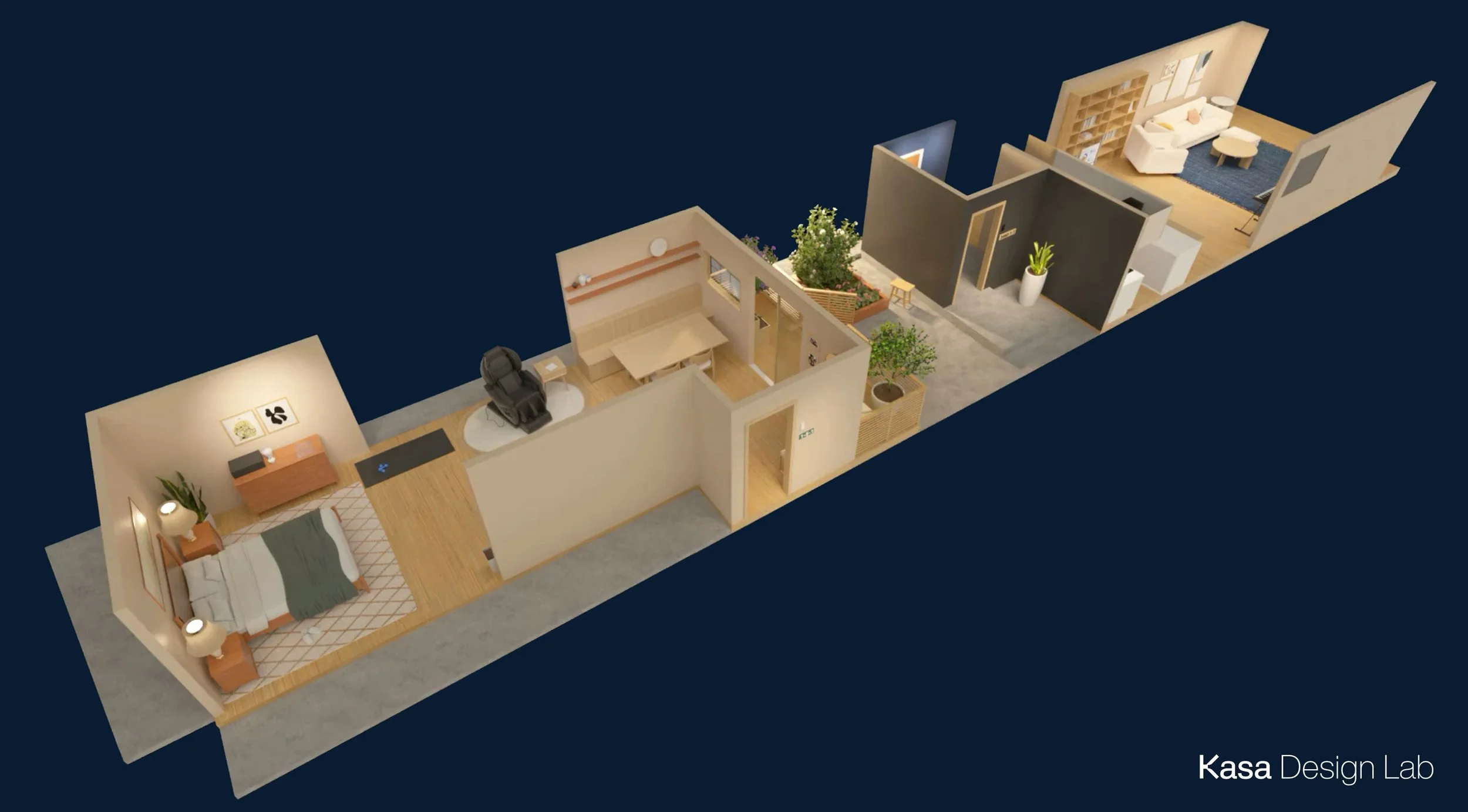
A 3D floor plan of a modern apartment with multiple rooms including a bedroom, living room, and office space, decorated with contemporary furniture and plants.
A black and white stylized icon resembling two lines crossing at the top, forming a symmetrical X shape.
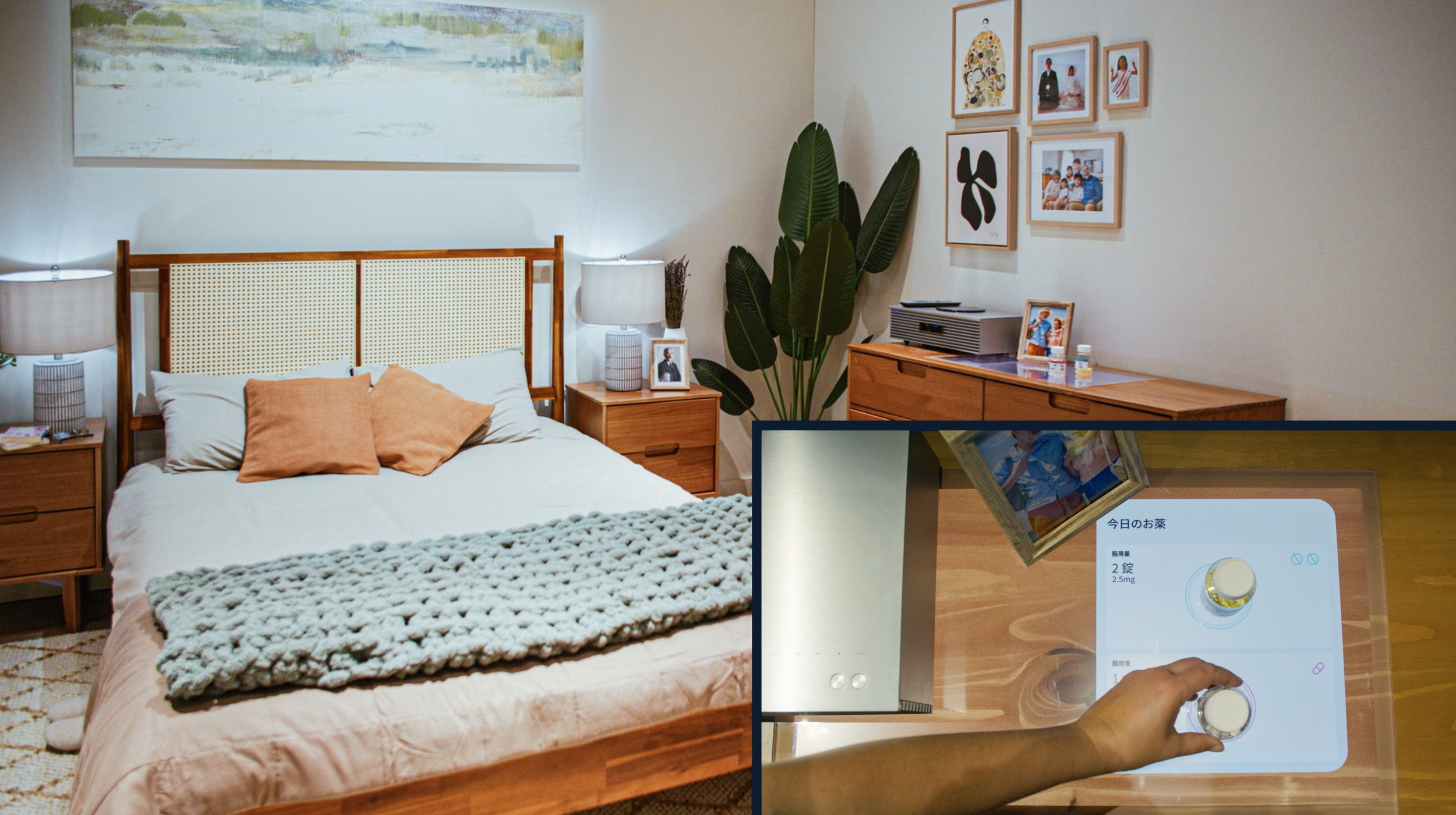
A cozy bedroom with a wooden bed frame and beige bedding, decorated with brown and cream pillows. There are two nightstands with lamps, a large abstract painting above the bed, and a cluster of tall green plants in the corner. The wall displays a gallery of framed artwork and photos. Part of a person’s hand and a tablet showing medication are visible in the bottom right corner.

Umi checks in with Grandma Naomi about her medications and how the room's temperature and white noise have improved her sleep.
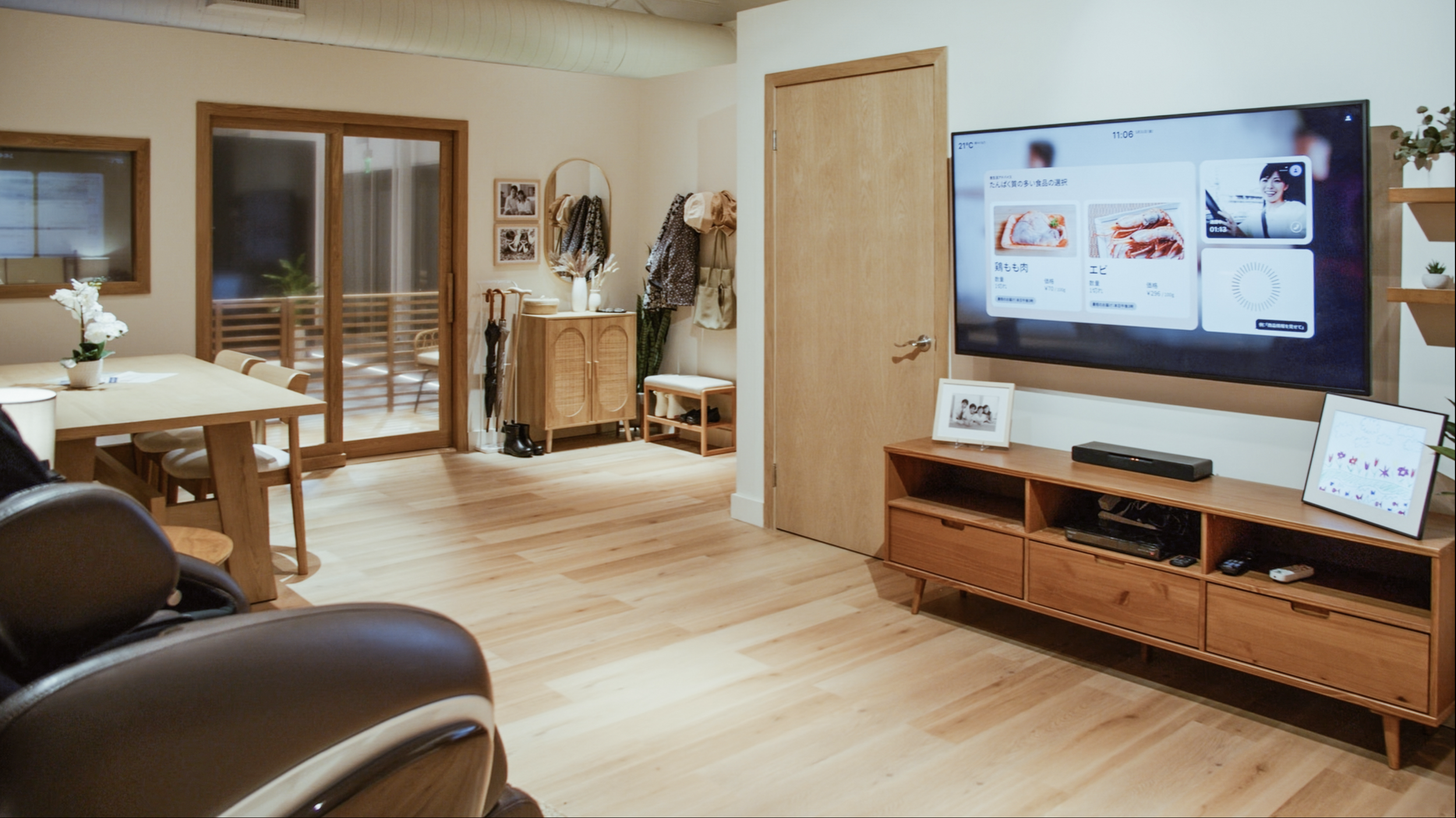
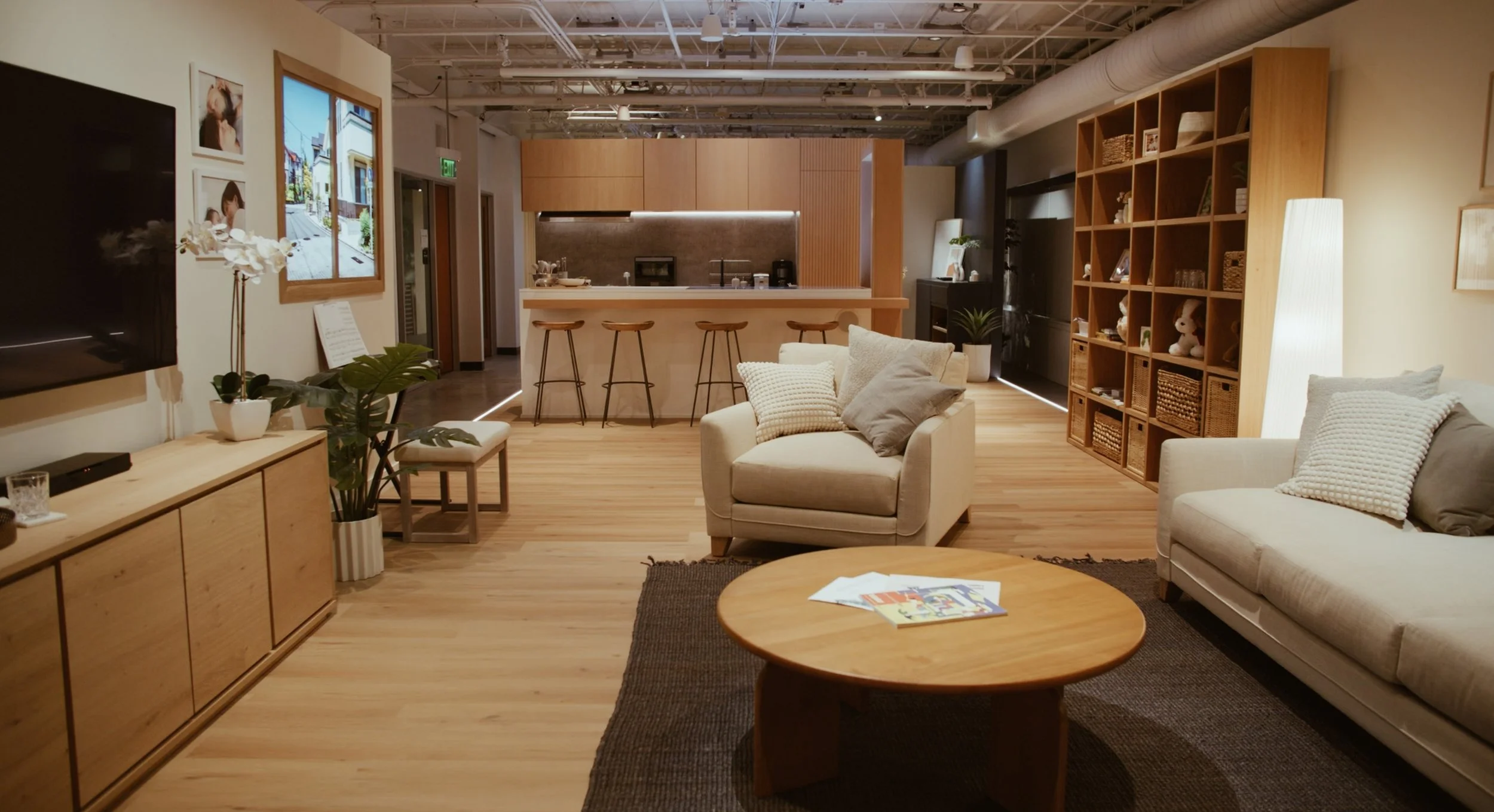
A living room with a dining table, chairs, and a large flat-screen TV mounted on a wooden console. There are framed photos, a mirror, coats, and plants near a sliding glass door leading to a balcony.

Umi connects Naomi with her daughter Mari to plan the virtual dinner they'll share across their two homes tonight.
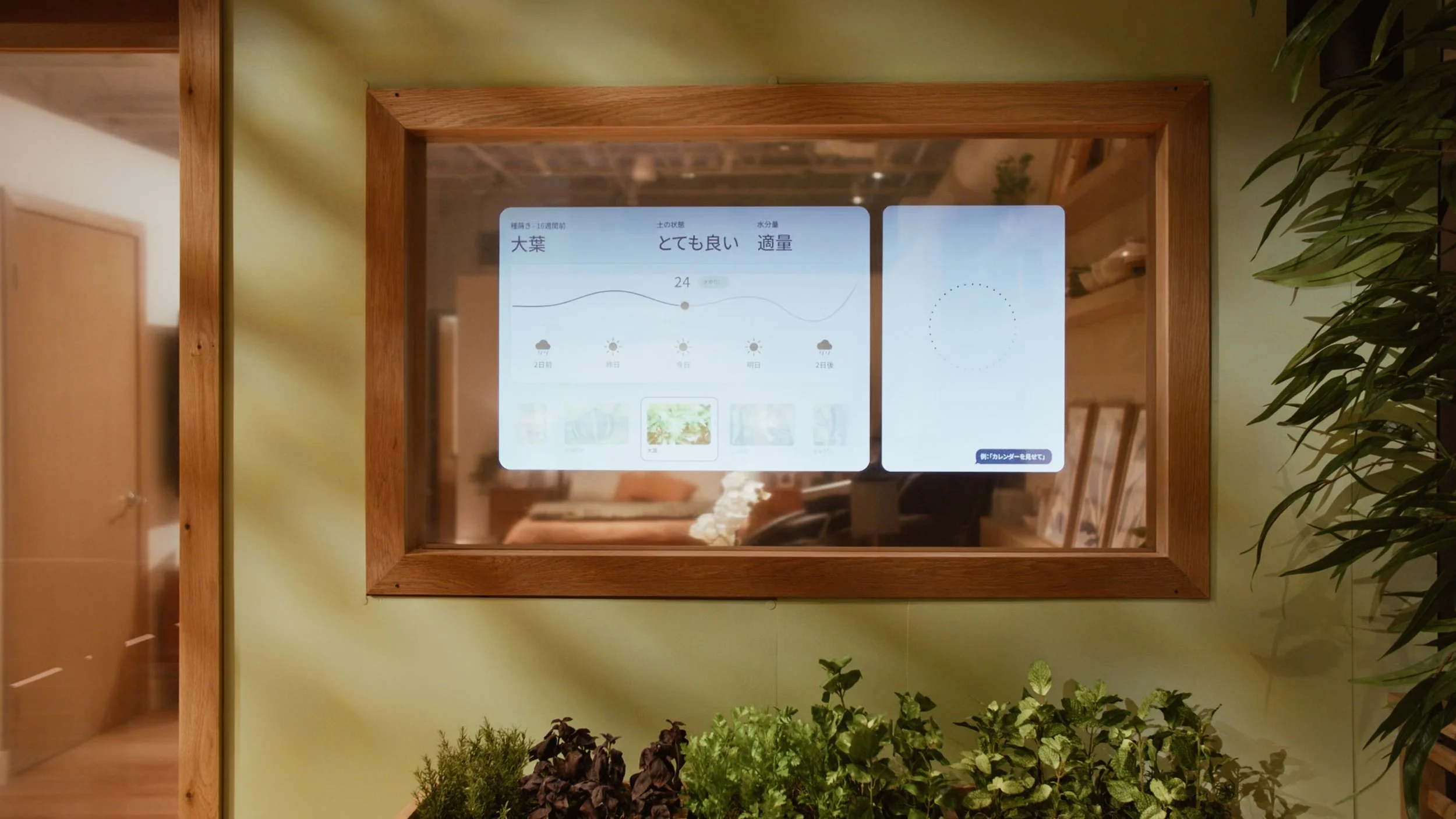
A digital weather display mounted on a wooden-framed mirror, showing weather information in Japanese with a background of a room with furniture and decorations reflected in the mirror.

Umi assists Naomi with her garden by selecting vegetables for the community dinner. We used Panasonic’s transparent OLED TV to create an enlarged, notional window interface.
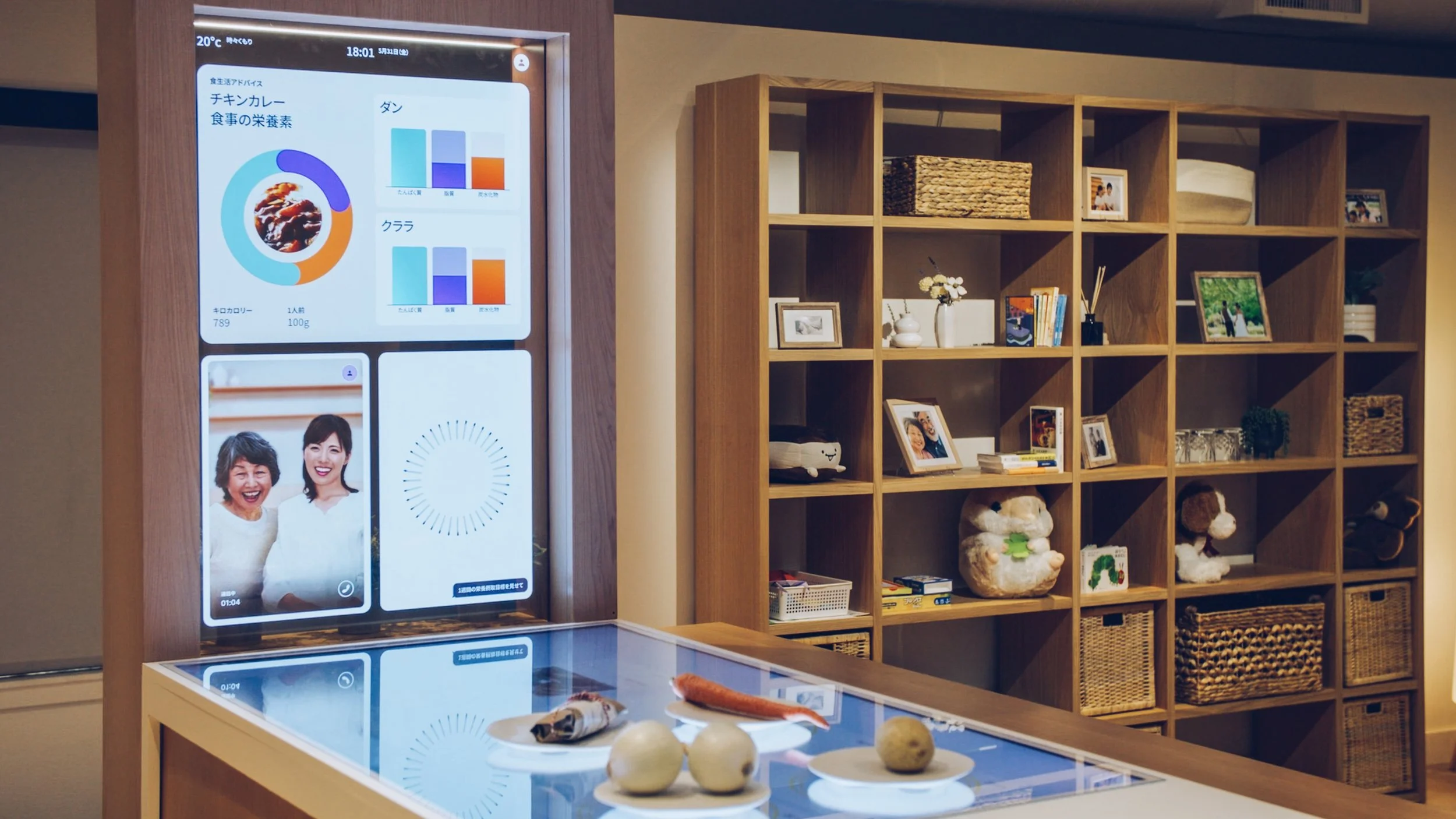
A digital screen displaying a food recommendation interface with charts and a photo of two smiling women. There is a wooden bookshelf filled with framed photographs, books, and decorative items in the background.

Umi hosts a virtual dinner between two homes on a transparent kitchen display, sharing live nutrition info as the meal comes together.
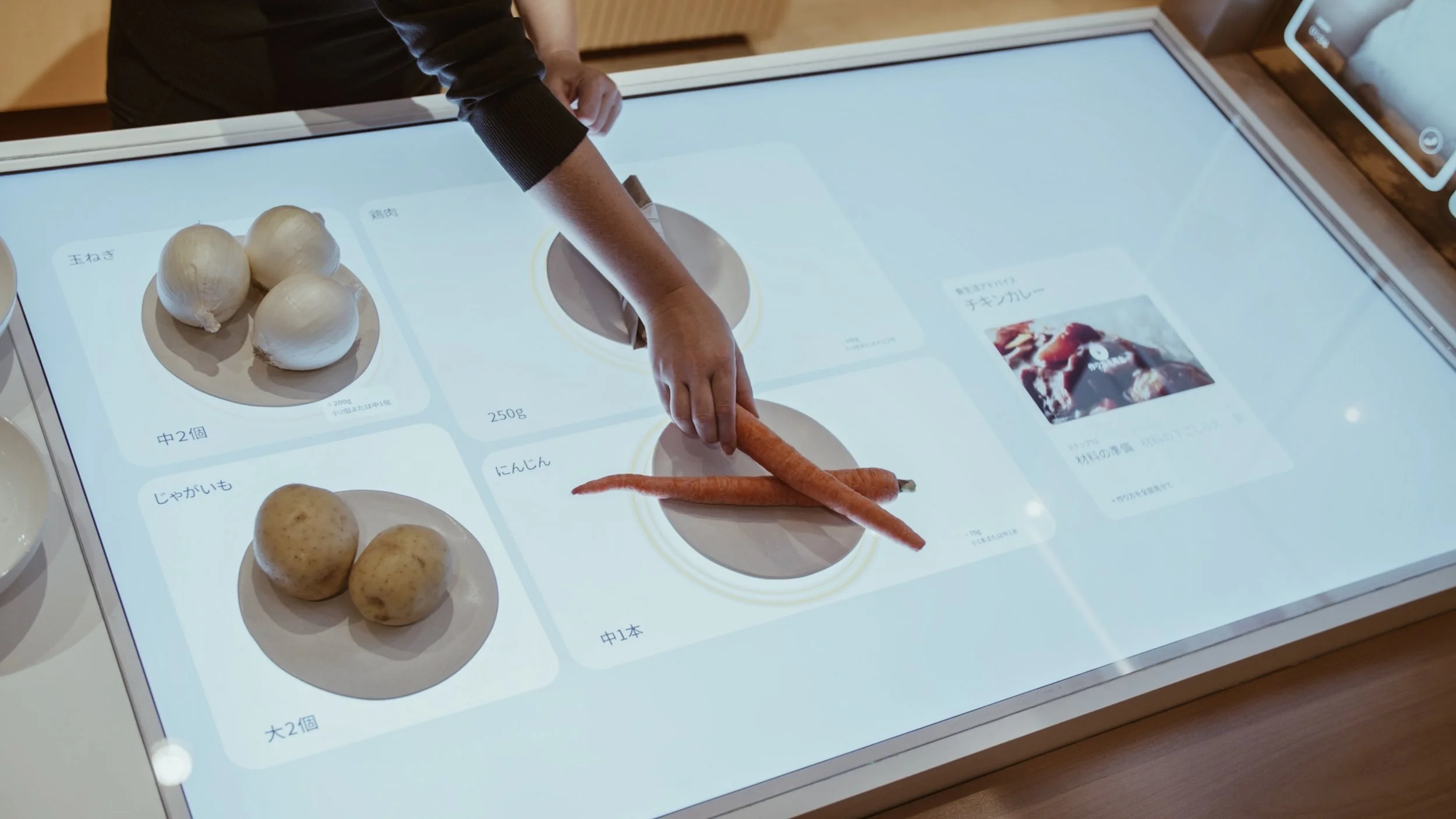
A person interacts with a touchscreen display featuring images of vegetables, including onions, potatoes, and carrots, in a grocery or food retail setting.

Umi coaches the kids through portions on a countertop that can see the ingredients in front of it.